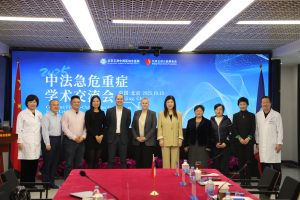
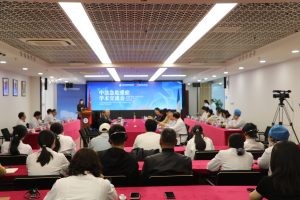
BEIJING, October 15, 2025 — Against the global backdrop of advancing pre-hospital emergency services, clinical resuscitation, and psychological intervention, the establishment of a multidisciplinary and multi-institutional “Integrated Critical Care Chain” has emerged as a clinical priority. On the morning of October 15, the “Sino-French Academic Exchange on Critical Care Medicine” was successfully convened at Beijing Royal Integrative Medicine Hospital (BRIMH).
The symposium featured preeminent experts from the Assistance Publique – Hôpitaux de Paris (AP-HP), who shared frontier European protocols with specialists from BRIMH, China-Japan Friendship Hospital, Beijing Jishuitan Hospital, and Beijing Huilongguan Hospital. Senior officials from the Changping District Health Commission also attended the event to discuss resource integration and mechanistic innovation in elevating the efficacy of critical care delivery.
Strategic Vision: A Seamless Chain of Life
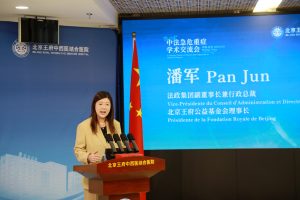
In her welcoming address, Ms. Pan Jun, Vice Chairperson and CEO of Fazheng Group, Chairperson of the Beijing Royal Charity Foundation, and initiator of the Sino-French series, underscored the strategic weight of the specialty. “Critical Care Medicine represents the ‘final line of defense’ for patient safety,” Ms. Pan remarked. “Our mission today transcends traditional academic exchange; we are here to forge a unified alliance—a seamless, cross-border ‘Chain of Life’ that injects new momentum into global critical care development and human wellness.”
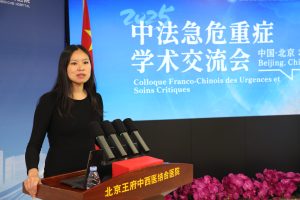
Dr. Na Na, Project Manager for Sino-French Relations at AP-HP International, followed with a detailed overview of the Paris emergency system’s architecture, emphasizing its robustness in mass casualty response, pre-hospital intervention, and multidisciplinary collaboration.
Clinical Discourse: Paris Frontier Models vs. Chinese Innovation
The seminar facilitated a rigorous technical dialogue between European established models and emerging Chinese practices:
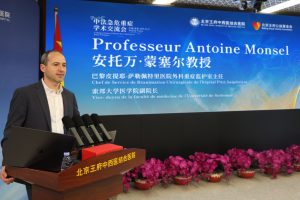
Mechanical Ventilation & ARDS:Professor Antoine Monsel, Vice Dean of the Sorbonne University Faculty of Medicine and Head of the Surgical ICU at Pitié-Salpêtrière Hospital, delivered a keynote on “Dyspnea and Mechanical Ventilation.” Drawing from his extensive expertise in Acute Respiratory Distress Syndrome (ARDS), Professor Monsel provided frontline insights into clinical standardization, resource allocation, and the management of complex, life-threatening cases.
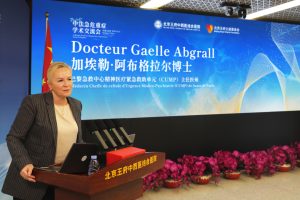
Psychological Crisis Intervention: Gaëlle Abgrall, a lead specialist of the Psychiatric Emergency Response Unit (CUMP) at SAMU Paris, offered a unique perspective on “French Models for Organizing Mental Health Support in Mass Casualty Incidents.” She elucidated how a mature psychological intervention framework can be activated synchronously with physical resuscitation—a model of significant reference value for China’s evolving emergency management systems.
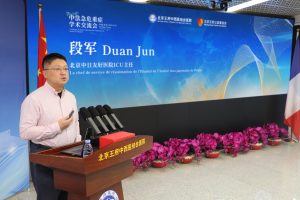
Technological Innovation: Duan Jun, Director of the ICU at China-Japan Friendship Hospital, addressed the global technical challenge of “Alarm Fatigue.” He showcased Chinese solutions powered by intelligent algorithms and innovative management mechanisms. Furthermore, his introduction of “In-Situ Simulation” training received high acclaim from French counterparts as a high-efficacy pedagogical standard for emergency training.
Consensus: Designing the Blueprint for Integrated Care
The seminar culminated in a high-level panel discussion on “Constructing an Integrated Critical Care Chain.” The debate centered on a universal clinical pain point: “In polytrauma cases, who makes the first incision?” The French model—where ICU physicians serve as the central coordinators and primary decision-makers—sparked intense deliberation among Chinese specialists.
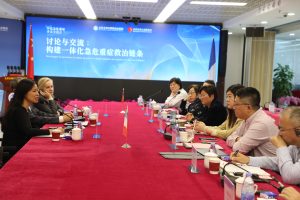
The dialogue expanded to address systemic integration:
Data Interoperability:Bridging the information gap between pre-hospital EMS and in-hospital reception.
Networked Triage:Adopting “bypass” protocols to transport critical patients directly to specialized trauma centers, circumventing standard ER delays.
Technological Mobilization:Implementing Mobile Stroke Units (MSU) and utilizing mobile applications to mobilize community volunteers for first-response interventions.
Conclusion and Future Outlook
Participants concluded that the symposium provided a rare synthesis of academic depth and practical utility, offering new methodologies for complex clinical problem-solving. This event marks a significant milestone in Sino-French cooperation within the field of Acute and Critical Care. Looking ahead, both nations intend to leverage this partnership for advanced curriculum development, technology transfer, and joint clinical research, ensuring that cutting-edge integrative medical science is translated into improved outcomes for patients worldwide.